
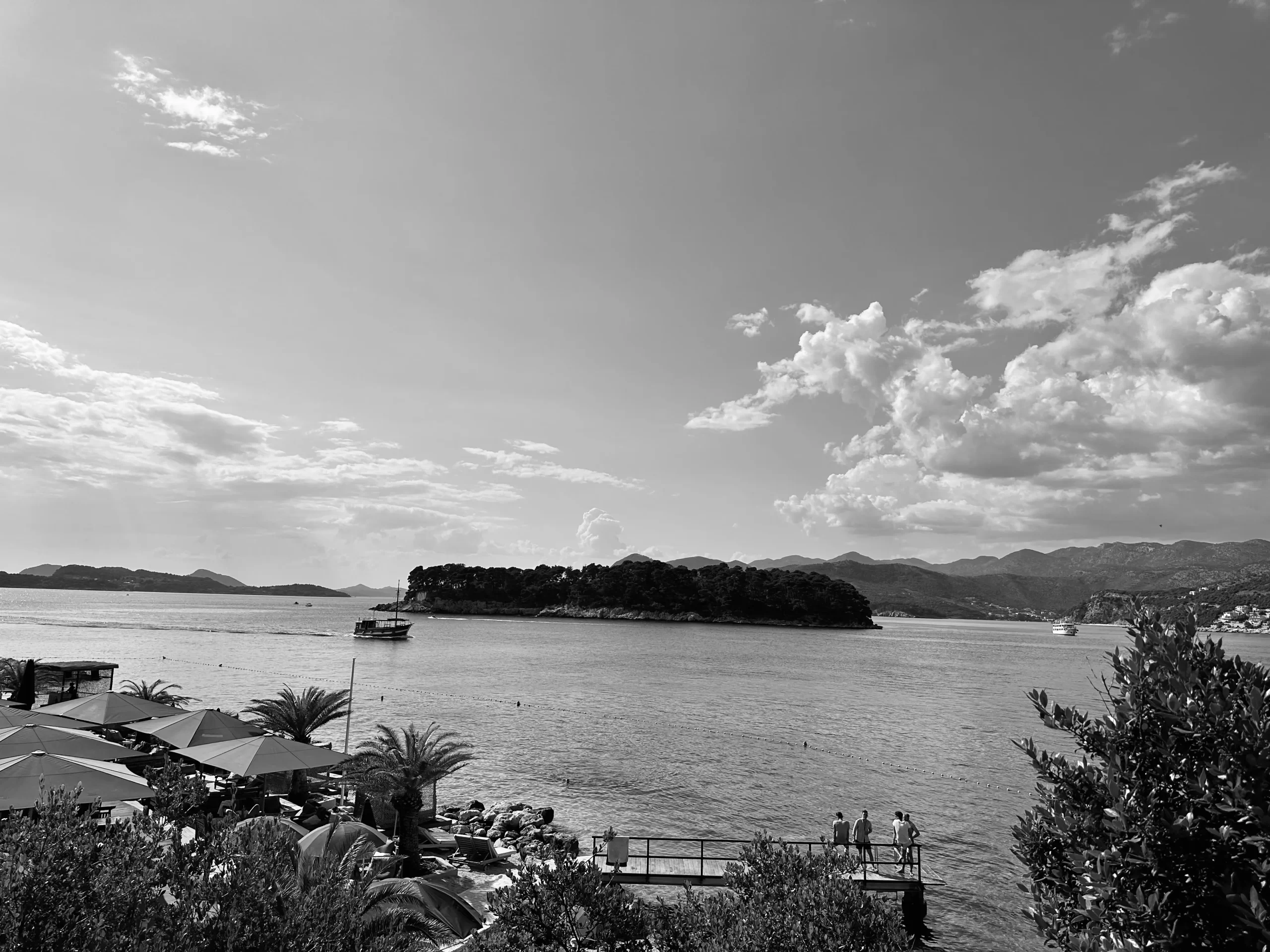
Croatia has more than a thousand beautiful islands, but Daksa island tells a disturbing story. This tiny uninhabited island near Dubrovnik holds one of Croatian history’s darkest chapters—a brutal massacre where authorities executed 53 people without trial in October 1944, after accusing them of Nazi collaboration.
Daksa might be the smallest of the Elaphiti islands at just 500 meters long and 200 meters wide, but its dark reputation overshadows its size. The island’s natural beauty shines through its cypress trees and Mediterranean vegetation, yet it remains completely deserted. Only the ruins of a 13th-century Franciscan monastery and a 19th-century lighthouse stand as quiet reminders of its troubled past. The tragic events of that night remained buried in post-war propaganda until 2009, when forensic scientists discovered bodies in open-air mass graves.
The island appears peaceful from Dubrovnik’s shores today. But beneath this calm exterior lies such a disturbing history that even with a price tag of €2 million, no one wants to buy this haunted piece of Croatian land.
A Glimpse of Daksa: Nature, Ruins, and Silence
A visit to Daksa’s shores transports you to a forgotten world. This boomerang-shaped island lies just 1.5 nautical miles from Dubrovnik’s busy harbor, yet remains almost completely isolated. Daksa is the smallest island in the Elaphiti archipelago, stretching only 500 meters long and 200 meters wide, with its peak reaching 24 meters above sea level.
Cypress and pine forests
Nature now rules most of Daksa’s terrain. A distinctive pine-cypress forest blankets the island, where these coniferous species help each other grow. Dark pine trees tower above thick vegetation across the island, their shadows seem to protect the island’s mysteries.
The 19th-century lighthouse
Daksa’s lighthouse, 150 years old, stands as one of the island’s most striking features. This historic structure, built during Austrian rule, ranks among the smallest lighthouses in the Adriatic. The Austro-Hungarian Monarchy built it after buying the island from the Franciscans in 1871. Though small, it served as a vital guide for sailors seeking shelter from storms.
Remains of the Franciscan monastery
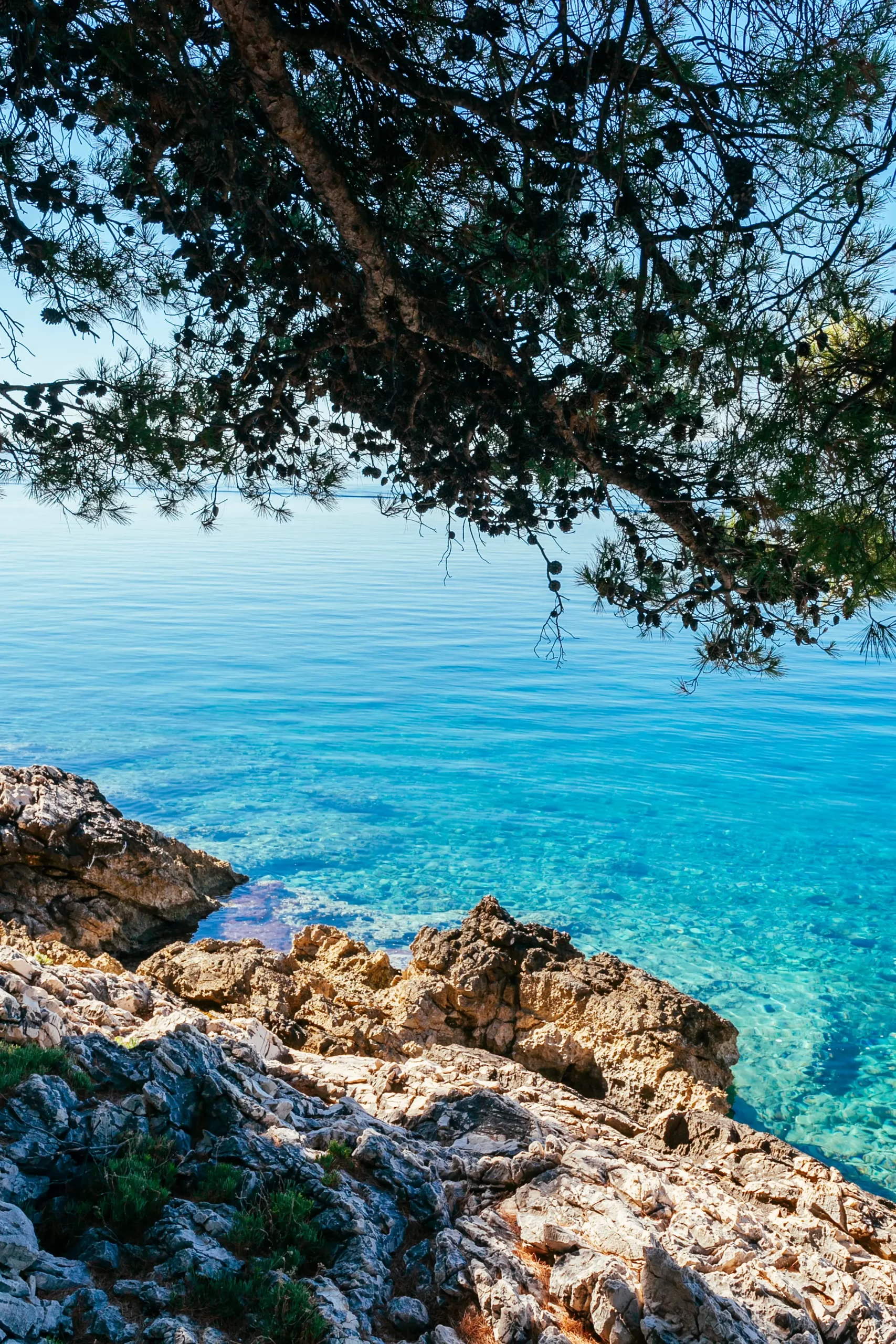
The ruins of a 13th-century Franciscan monastery crown Daksa’s highest point. Historical records confirm the presence of a religious complex that once included two churches — one dedicated to Our Lady and the other to St. Sabina. The monastery was active for centuries before being abandoned in the 19th century, leaving behind silent stone walls now overtaken by nature.
Signs of abandonment and decay
On one side of the island, a large, deteriorating Austro-Hungarian-era villa stands abandoned, while elsewhere, the empty house of the former lighthouse keeper remains a quiet reminder of simpler times.
There’s also an unfinished military tower — a forward position once planned by the Republic of Dubrovnik but never completed. These crumbling structures, combined with the island’s dark wartime history, give Daksa an eerie, almost frozen-in-time atmosphere that keeps most visitors at a distance.
The Darkest Chapter: Executions Without Trial
The peaceful island of Daksa changed forever when partisan forces entered Dubrovnik in October 1944. This tiny island became the site of one of Croatia’s darkest moments during World War II’s final months.
Who were the victims?
Partisan forces arrested more than 300 Dubrovnik citizens on October 18, 1944. They targeted 53 men specifically, labeling them as Nazi collaborators. These men represented the city’s backbone – respected citizens, politicians, business leaders and religious figures.
The list of executed people included the city’s mayor Niko Koprivica and Father Petar Perica (the composer of “Djevo Kraljice Hrvata”). The remains of three Catholic priests were later found with their religious items. The victims ranged from 20 to 70 years old. Records show that “there was hardly anybody who had anything to do with the fascist war crimes from 1941”.
How the executions were carried out
Boats transported these condemned men from Dubrovnik’s prisons to Daksa’s shores on October 24-25, 1944. The killings started at the island’s Mandrač harbor. Forensic evidence shows that 9mm gunshot wounds to the head caused most deaths.
The executioners stripped their victims to underwear and bound some with wire around their limbs. The victims knelt before being shot from behind at close range, according to forensic analysis. Nobody buried the bodies or held proper funerals – they were just “left to rot across the island”.
The role of fear in silencing the truth
Flyers appeared in Dubrovnik on October 29 announcing the “verdict” for 36 civilians sentenced to death. These notices claimed officials conducted trials and investigations, but no such events ever happened.
The authorities warned people “not to go looking for the bodies of friends and family on Daksa—or else risk meeting a similar fate”. Fear kept the community silent for decades. Even the lighthouse keeper’s family, who left the island during the killings, stayed quiet out of terror.
Why the island became taboo
Daksa turned into forbidden ground. Nobody could visit the island until 1990. People risked their lives by talking about the massacre under Tito’s communist rule.
This massacre challenges the usual story of partisan forces as pure heroic liberators. Historians note that “Daksa was deliberately forgotten, drowned in post-war propaganda”. Scientists finally started recovering and identifying the remains in 2009, sixty-five years after these events.
From Forgotten to Found: Rediscovering Daksa’s Past
Daksa’s dark history stayed hidden under a silence that lasted decades. Nobody spoke about it until 2009—a full 65 years after the massacre. The truth started coming out when people began digging into the island’s soil.
The 2009 exhumation and its findings
The Society of Dubrovnik Victims began digging on Daksa island after Croatia gained independence. Their work paid off in October 2009 when forensic experts found two mass graves with 53 victims. The first site held 48 bodies, and a second location revealed 5 more sets of remains. The victims’ bodies showed clear signs of execution-style killings with gunshot wounds to the head at close range.
Artifacts and evidence from the graves
The team uncovered touching personal items next to the remains. Catholic clergy members were among the dead, as shown by rosary beads, crucifixes, and religious medallions found at the site. The soil had preserved wallets with identity cards and family photographs that stayed intact through the decades. Some victims still had wire bindings around their wrists—a silent witness to their final moments.
DNA identification and memorial efforts
DNA analysis helped experts identify 18 victims by matching them with living relatives. These identified remains got a proper burial in Dubrovnik’s cemetery in 2010. This marked the first time anyone publicly acknowledged this historical tragedy. St. Blaise Church later held a memorial Mass that brought together descendants who had waited generations to find closure. Yet 35 sets of remains still need identification, leaving many families waiting to learn their relatives’ fate.
Why the full story is still unclear
Several factors keep us from knowing Daksa’s complete story. Communist-era officials either destroyed their records or locked them away in archives nobody can access. The witnesses who could have shared what happened have mostly died, taking their knowledge with them. The political fallout from Yugoslavia breaking apart makes it hard to study this history objectively. Old divisions still shape how people see this chapter today.
The island stands as a physical reminder of Croatia’s complex past. Natural beauty and historical darkness mix together on one of the smallest yet most important islands in the Elaphiti archipelago.
Visiting the Elaphiti Islands: A Travel Tip
A quick search for Elaphiti Islands boat tours from Dubrovnik reveals something striking—Daksa never appears on standard itineraries.
Why Daksa is rarely included in boat tours
The island’s troubled past keeps it off mainstream tourism routes. When people ask about visiting, tour operators usually respond bluntly: “We don’t go there.” This avoidance comes in part from practical issues—the island has no proper docking facilities. Local superstition plays a major role too. Even fishermen and seagulls seem to stay away from its shores, as if they can feel the island’s dark energy.
How to see Daksa from a distance
You don’t need to step on the island to catch a glimpse of this mysterious place. Westbound boat tours from Dubrovnik’s harbor give you a perfect view of the small J-shaped landmass between the mainland and Koločep Island. The cypress trees make a striking silhouette against the horizon, and on clear days, you can spot the lighthouse ruins. Early morning tours are best for photographers—the sunrise lights up the eastern side of the island beautifully.
Booking a private boat tour from Dubrovnik
Private boat tours from Dubrovnik are the best way to explore the Elaphiti Islands. Standard group trips focus on the three inhabited islands (Koločep, Lopud, and Šipan), but private charters let you customize your journey. Companies like Private Boat Adventures Dubrovnik run half-day (4-hour) and full-day (6-hour) private tours. Their captains can direct the boat near Daksa if you ask, weather permitting.
What local guides can tell you that books can’t
The stories local captains share about Daksa’s history won’t show up in any guidebook. Many have family members who saw what happened after the 1944 events, and they give a viewpoint rarely written down. The island was off-limits until 1990, which created more whispered legends than documented facts.
Take the road less traveled. Find the hidden stories of the Elaphiti Islands on a custom private tour and hear tales only locals know.
Tiny Island, Tragic Past
Daksa Island is both a beautiful and haunting gem among Croatia’s thousand islands. This tiny boomerang-shaped landmass holds one of Croatia’s darkest historical chapters beneath its peaceful cypress canopy. The island’s natural beauty masks its tragic past, and standard tourism guides often skip it. It stands as a silent memorial to 53 victims who died without trial in October 1944.
The island’s complex legacy still affects generations today. Scientists have made progress since 2009 to recover and identify remains, but many families still wait for closure. The executed were the city’s prominent citizens, religious leaders, and regular Dubrovnik residents. Their stories show how political turmoil can turn paradise into hell.
Anyone can visit Daksa now, but it remains mostly empty. The abandoned monastery ruins and lighthouse stand watch over both beauty and tragedy. Local boat captains will take you near its shores if you ask, but most Dubrovnik residents think it’s haunted and won’t step on the land.
Daksa shows us how history’s darkest moments can happen in the most beautiful places. The island serves as a powerful reminder of Croatia’s complex past for those who want to look beyond Dubrovnik’s tourist spots.
Take the road less traveled. Let a private tour guide you through the Elaphiti Islands’ secrets and hear the authentic stories that only locals know.